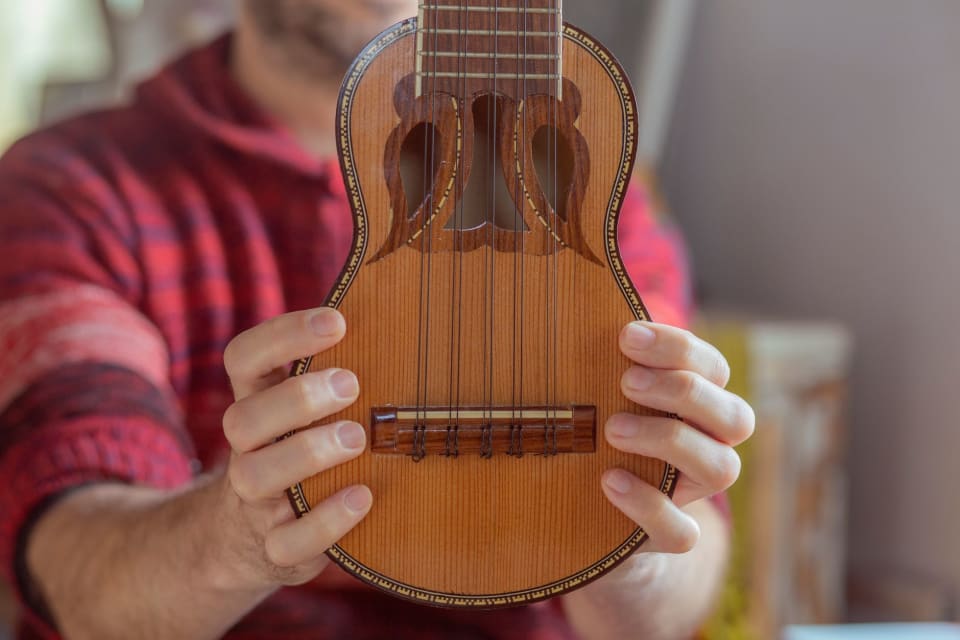




The charango is a small plucked string instrument of the Andean peoples (Bolivia, Peru, Ecuador), a kind of lute or small guitar with ten strings (in five pairs). Historically its body was made from an armadillo shell (nowadays more often wood), which gave the instrument its inimitable appearance and sound.
The charango appeared after the arrival of the Spanish as a local, miniature “answer” to the European guitar and lute. Its sound is very high, ringing, sparkling, ideal for a fast “trembling” accompaniment (charangueo) and lyrical melodies. The charango is an inseparable part of Andean folk music, sounding alongside the quena and siku flutes. Its bright, joyous voice embodies the soul of the mountain peoples of South America and has long become recognizable in world music.