
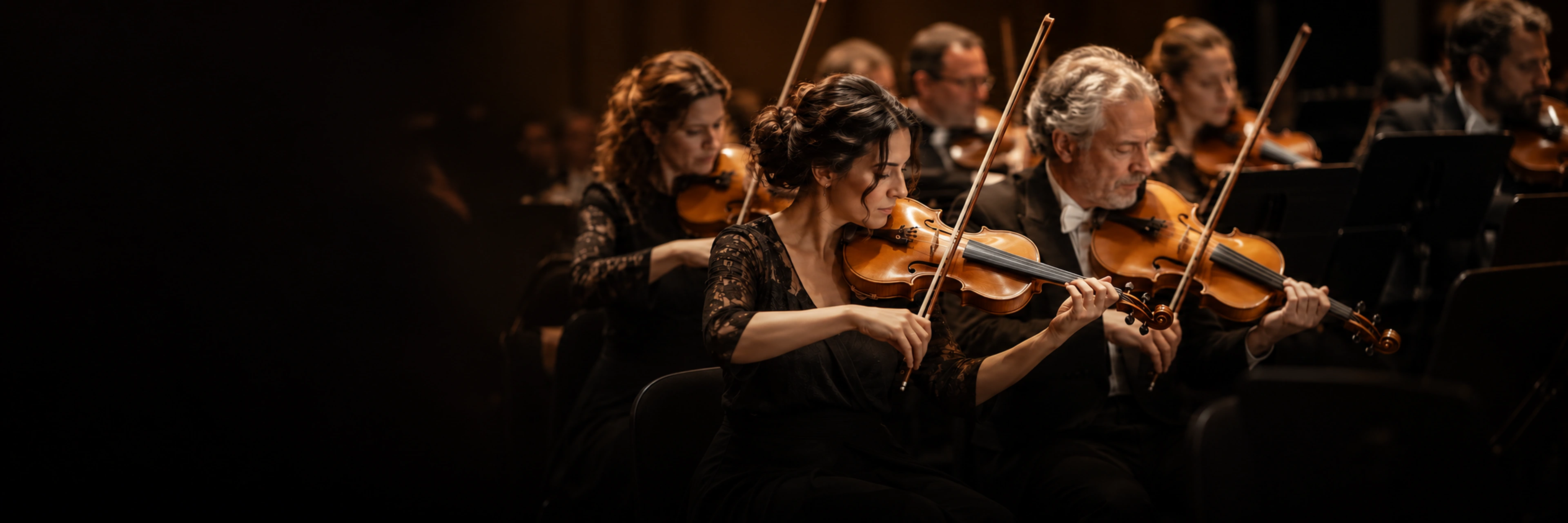

A concerto is simultaneously a musical duel and a dialogue. The soloist displays virtuosity and emotional depth; the orchestra answers, supports, and contradicts. The Classical form is three movements (fast–slow–fast).
The climax of the concerto is the cadenza, when the orchestra falls silent and the soloist improvises (or plays a written-out improvisation). Peaks of the genre: Mozart's piano concertos; Beethoven's five piano concertos and one for violin; Brahms's Violin Concerto; Grieg's Piano Concerto. Revutsky's Piano Concerto in D major is a treasure of the national school.
The genre was born in the Baroque: first as the concerto grosso (a dialogue between a small group of soloists and the orchestra in Corelli and Vivaldi), and later as the solo concerto, where a single performer is set against the whole orchestra. The 20th century brought concertos for unconventional soloists — from percussion to the orchestra itself (Bartók's Concerto for Orchestra). The Ukrainian school gave vivid examples of the genre in the works of Revutsky, Lyatoshynsky, and Skoryk.