


Genres
26 terms
Ars Nova
Ars nova (“the new art,” 14th-century France and Italy) is a revolution in rhythm and notation that gave music independence from words.

Avant-garde
Avant-garde is a broad movement of 20th-century experimental music that breaks established forms and sound norms.

Aleatoric Music
Aleatoric music (from the Latin alea — “dice”) is music in which part of the decisions is left to chance or to the performer's choice.

Atonal Music
Atonal music is music without a clear tonal center, where all twelve pitches are equal.
Baroque
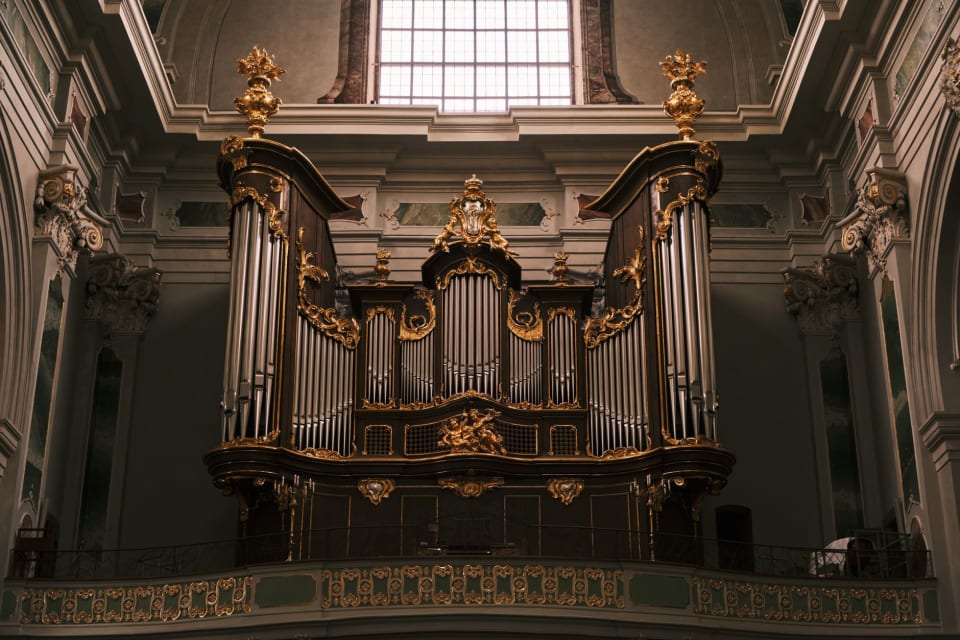
The Baroque (1600–1750) is the era of Bach, Handel, and Vivaldi — the birth of opera, concerto, and sonata.
Verismo
Verismo is the Italian operatic realism of the late 19th century, bringing the everyday life of ordinary people and their passions to the s…

Dodecaphony
Dodecaphony is a compositional technique in which all twelve pitches of the chromatic scale are used in a predetermined order (the row).
Second Viennese School
The Second Viennese School — the circle of Arnold Schoenberg and his pupils Berg and Webern, who in the early 20th century abandoned tonali…

Expressionism
Expressionism (1900–1930s) is the music of extreme inner states — anxiety, terror, ecstasy.

Singspiel
Singspiel is an 18th-century German musical-dramatic genre with spoken dialogue between sung numbers, often on a fairy-tale or comic plot.




