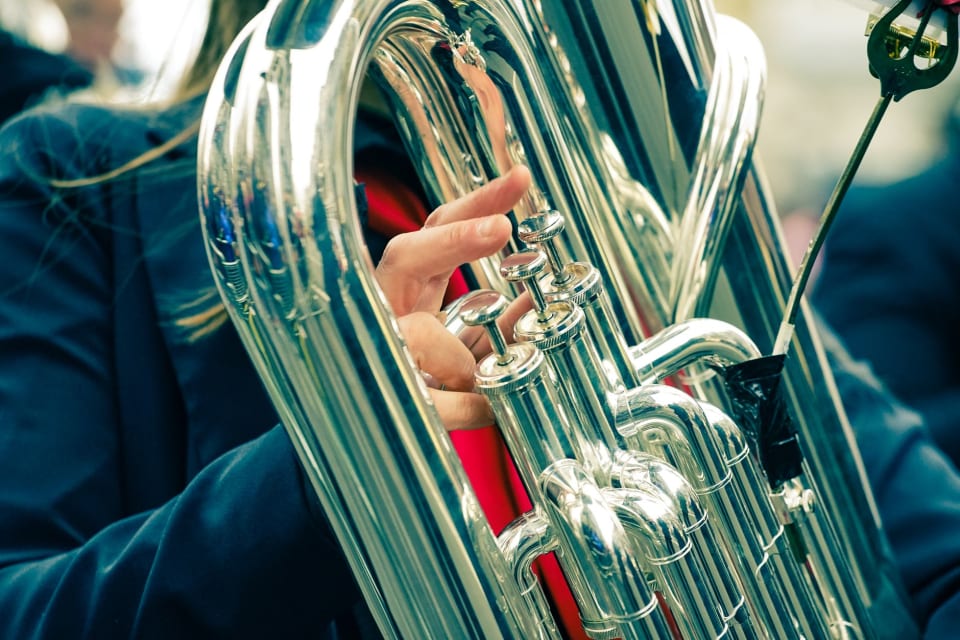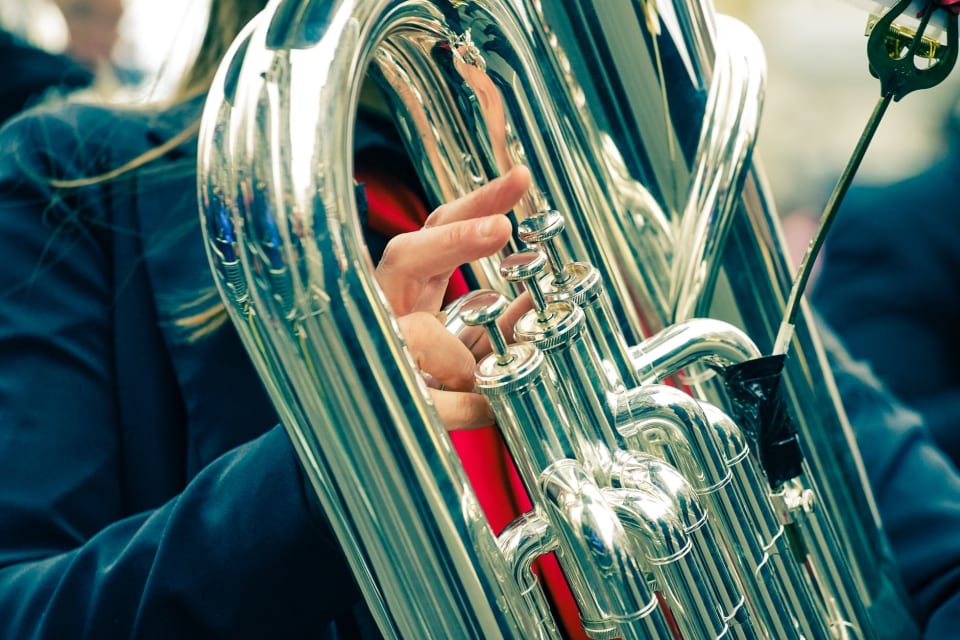



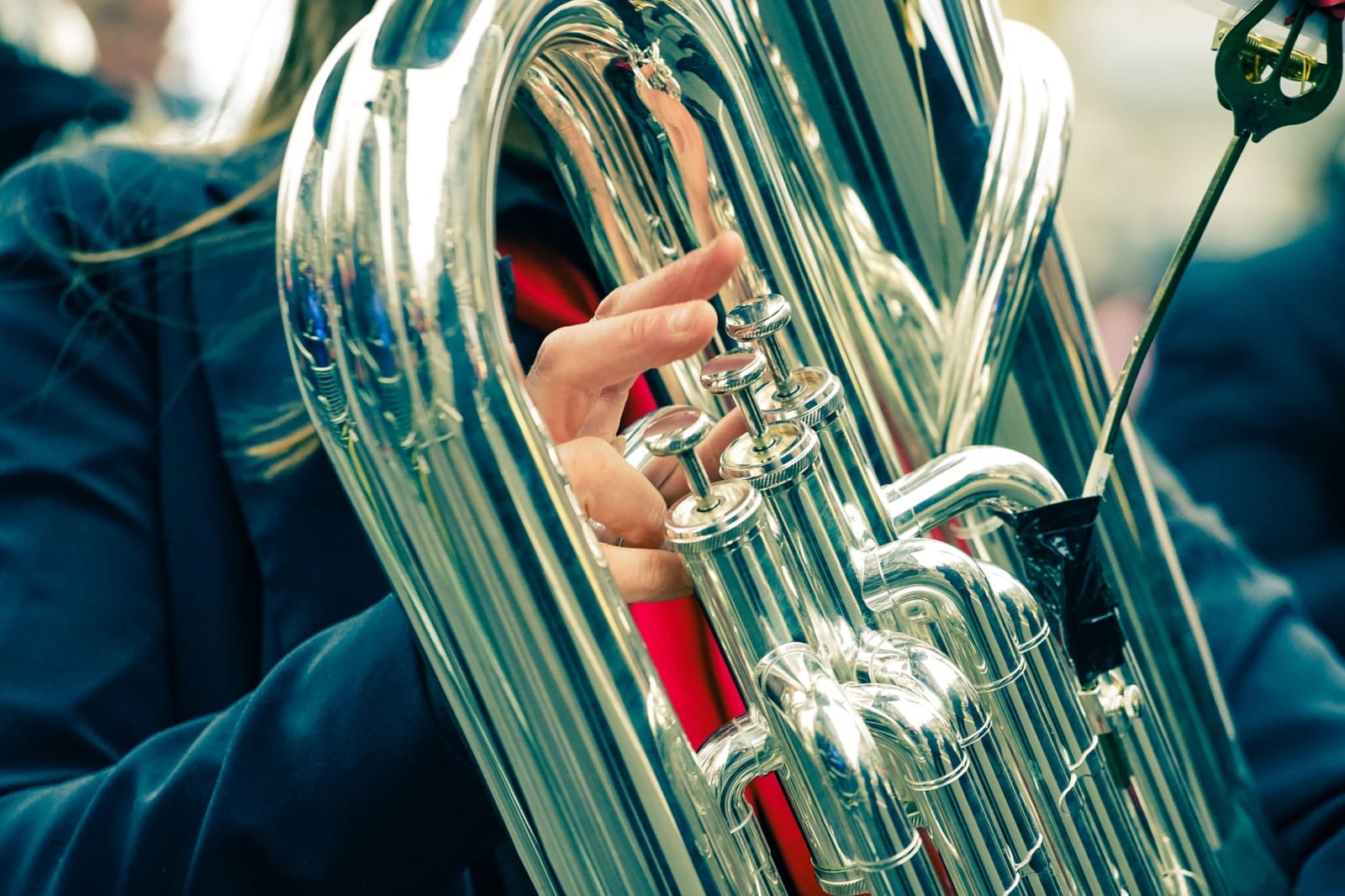
The euphonium (from Greek — “beautiful-sounding”) was invented in 1843 by the German maker Ferdinand Sommer. The instrument filled the gap between French horn and tuba: a mid-low range, but the sound is not harsh like a trumpet — it is round, soft, “singing.”
Construction: a wide conical bore (unlike the cylindrical trumpet), 3–4 valves, a large upward-facing bell. The performer holds the instrument vertically. Euphonium parts are usually written in bass clef at concert pitch (tenor clef for high passages); in British brass bands they are written in transposing treble clef in B-flat.
The euphonium is the king of the British-style brass band: in such bands it is entrusted with the most expressive lyrical solos. It appears less often in the symphony orchestra, but important solos (written for tenor tuba / tenor horn and today played on euphonium) occur in “Mars” from Holst's The Planets and in the first movement of Mahler's Symphony No. 7. Legends: Steven Mead, Adam Frey. In Ukraine the euphonium sounds in military and wind bands, and in performances at the National Opera.