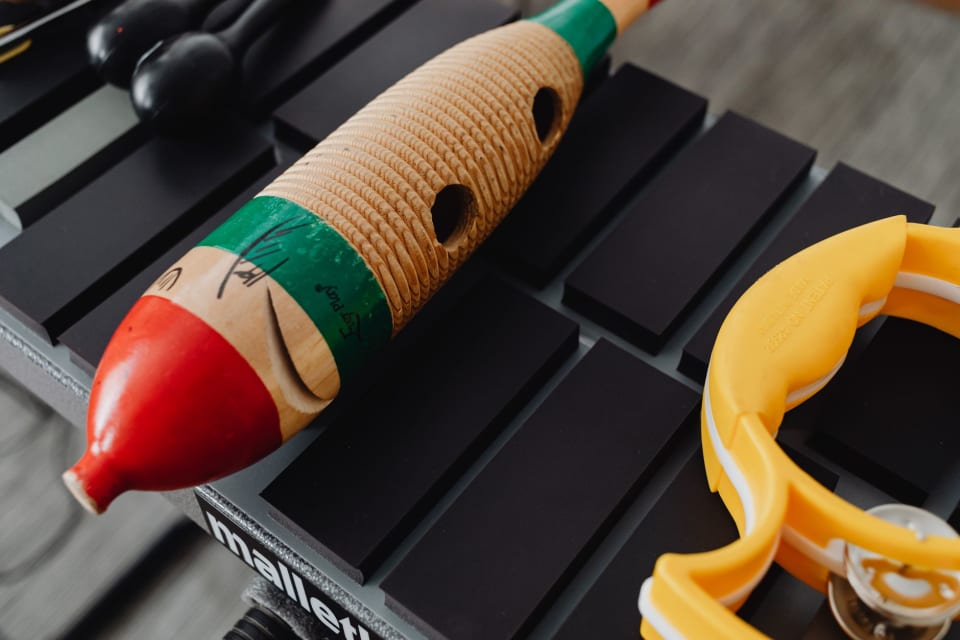




The güiro is a Latin American percussion-noise instrument traditionally made from a dried hollow calabash gourd with transverse notches on its surface. The player holds the instrument in one hand and, with the other, scrapes the notches with a wooden or metal stick or a comb-like scraper.
Depending on the direction and speed of the stroke, the güiro produces a characteristic clattering, “scraping” sound — now short accents, now long rustling sweeps. The instrument has indigenous and African roots and is an indispensable part of the rhythm section of many Latin American genres — salsa, cumbia, merengue, son. Despite its simple construction, the güiro demands a feel for rhythm and dexterity from the musician, for it is precisely this that gives the music its special “rustling” spring and drive.