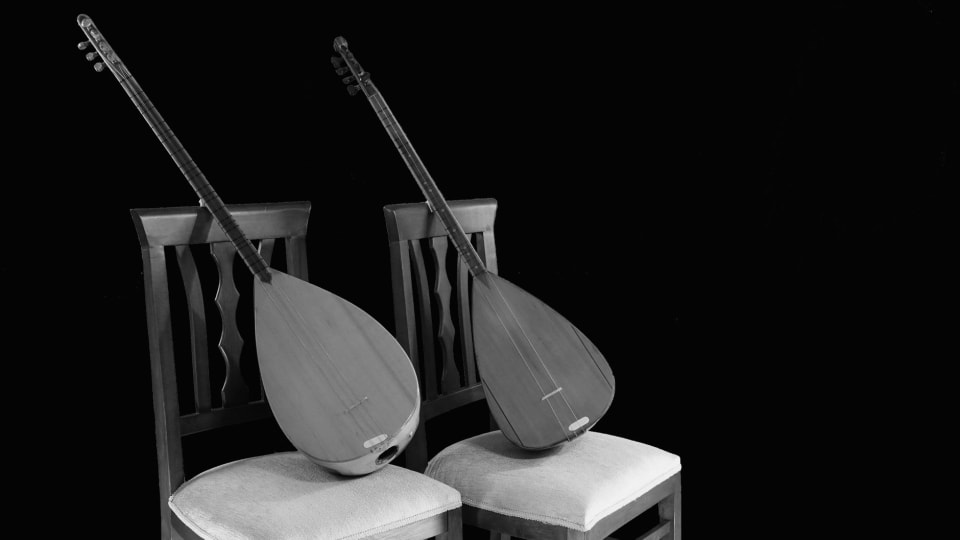




The saz (whose most common variety is called the bağlama) is a plucked long-necked lute, one of the most important folk instruments of Turkey and the wider region of the Middle East and the Balkans. It has a pear-shaped body, a very long neck with numerous frets, and usually seven strings grouped into three courses.
A distinctive feature of the saz is its movable tied frets, which allow it to reproduce the microtones characteristic of Eastern modes (makams). The saz is the soul of the tradition of the wandering singer-poets, the âşık, who to its accompaniment performed epic tales, love lyrics, and spiritual songs. Its soft, ringing sound is inseparably tied to the poetic word. Today the saz remains a symbol of Turkish musical identity and sounds actively in both folk and contemporary music.