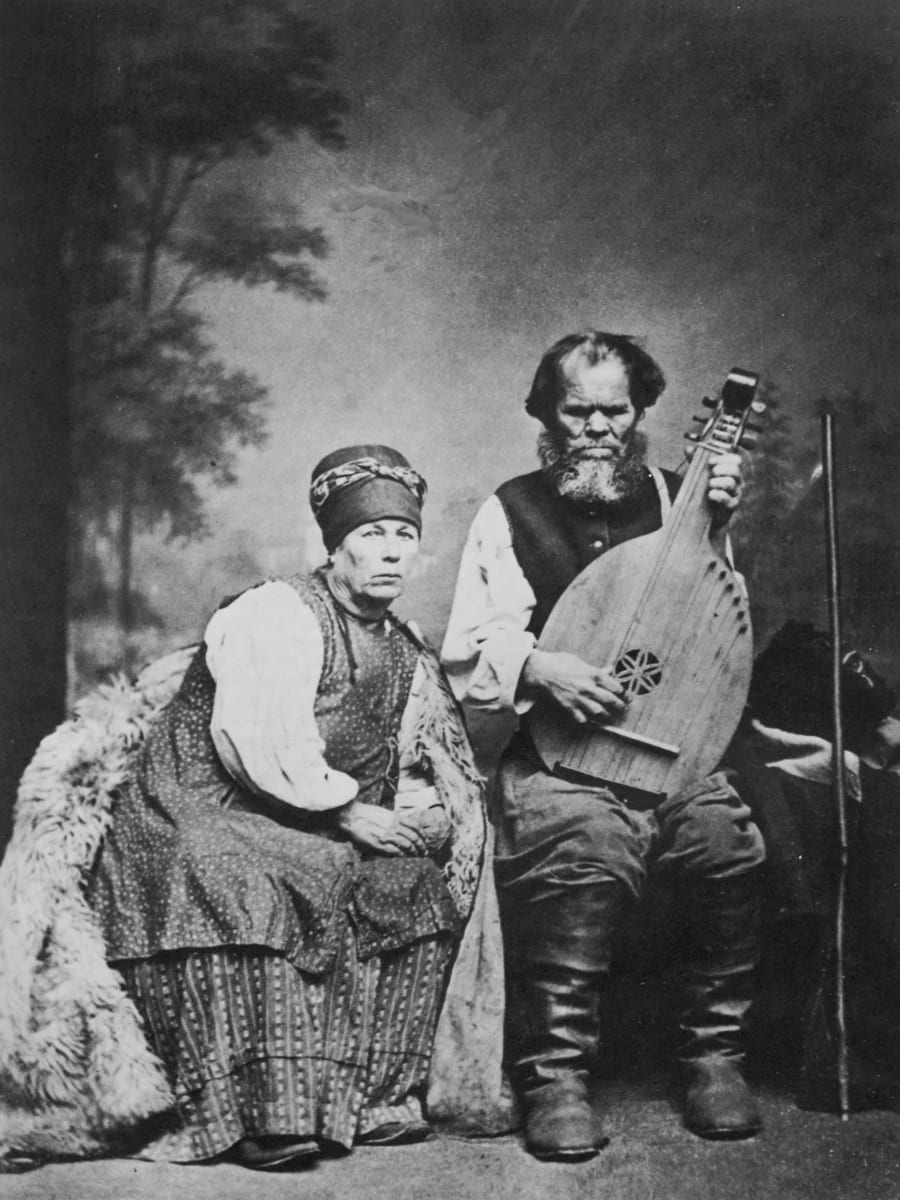


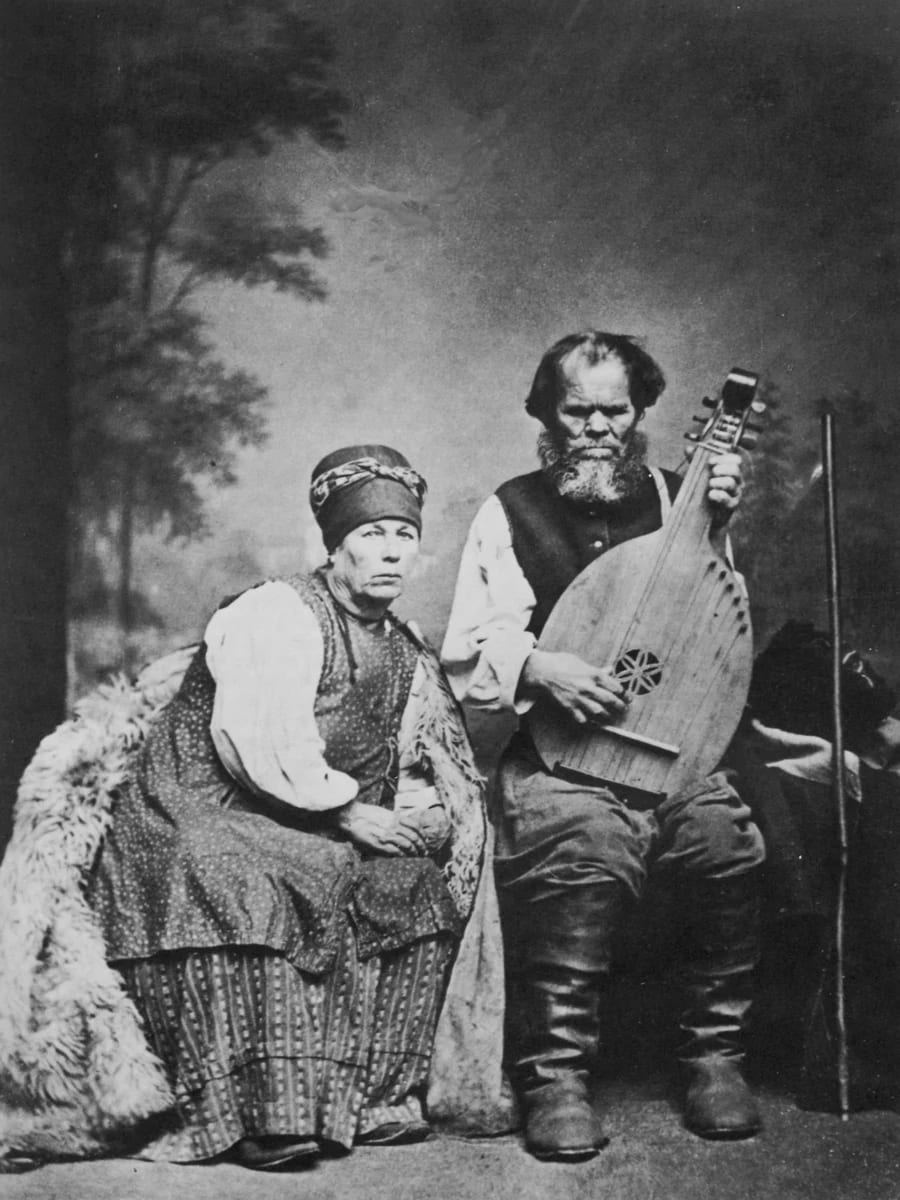
Kobzarstvo was not just a performing art but an entire social institution. From the 16th–17th centuries, blind boys were apprenticed to master kobzars, passed through a vyzvilka (ritual initiation), and learned the dumy, the repertoire, and the secret lebiiska language. Kobzars traveled from fair to fair, singing for the people of Cossack deeds, Turkish captivity, and faith.
Legendary 19th–20th-century kobzars: Ostap Veresai (1803–1890), Mykhailo Kravchenko, Ivan Kuchuhura-Kucherenko, Fedir Kushneryk. In the 1930s the Stalin regime physically exterminated the kobzar guild: according to various sources, 200 to 300 kobzars were shot at the Sanzharivka ravine near Kharkiv at the so-called “congress of kobzars.” Today kobzarstvo is being revived by the Kyiv Kobzar Guild, Mykola Budnyk, and Taras Kompanichenko. In 2024 the safeguarding programme of the kobza and wheel lyre tradition was selected for UNESCO's Register of Good Safeguarding Practices.