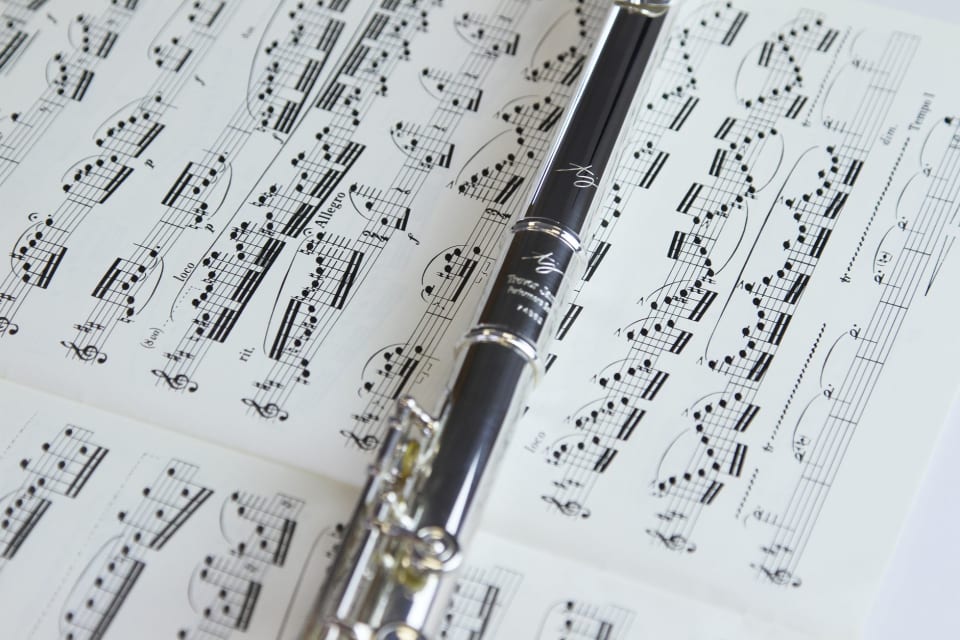



The chromatic scale is the “full palette” of musical pitches in the Western tradition. Each semitone is a distinct color; major and minor scales use only a subset (7 out of 12), but chromaticism is always available.
Chromatic runs are a signature device of the Romantics (Liszt, Chopin) and especially of Wagner, whose Tristan und Isolde is saturated with chromaticism that dissolves clear tonality. In the 20th century, Arnold Schoenberg turned the chromatic scale into the foundation of dodecaphony — all twelve pitches equal, none “primary.”
The chromatic scale consists of twelve semitones — every pitch within the octave. In classical music, chromaticism most often serves as ornament or an “approach” to diatonic degrees, heightening expressiveness and tension. Because all twelve pitches are evenly spaced, the chromatic scale has no tonal centre of its own, and it was precisely this “neutrality” that made it the building material of 20th-century atonal music.